Fuel for Biblical Studies: Italian Entrée Edition

In the March 26 issue of All You magazine, my wife, Carrie, has had following recipe featured: The roll-ups really are quite good, and of course, the black-and-white picture hardly does justice to the visual appeal of the dish. In addition to the instructions here, the chef herself does suggest that the “sprinkl[ing] with mozzarella” (#4) should be done rather generously. ...

March 8, 2010 · 1 min · J. David Stark

February Biblioblog Top 50

Jeremy Thompson has the month-end biblioblog rankings available, and Joel Watts again tops the chart. Congratulations are also due to the folks at Near Emmaus who, after cracking the top 50 in the middle of the month, have now settled into the number 40 slot for February as a whole. Today will tell, but on the back of what may turn out to be the busiest month yet, New Testament Interpretation has also risen to 79th place, its strongest standing thus far. Many thanks to everyone for the interest. ...

March 2, 2010 · 1 min · J. David Stark

Biblical Studies Carnival LI

Brooke Lester has a bipartite Biblical Studies Carnival LI available at Anumma. In consideration of February 3 as Blogroll Amnesty Day, Lester particularly highlights the smaller fry in the biblioblogging community.

March 1, 2010 · 1 min · J. David Stark
klyne-snodgrass

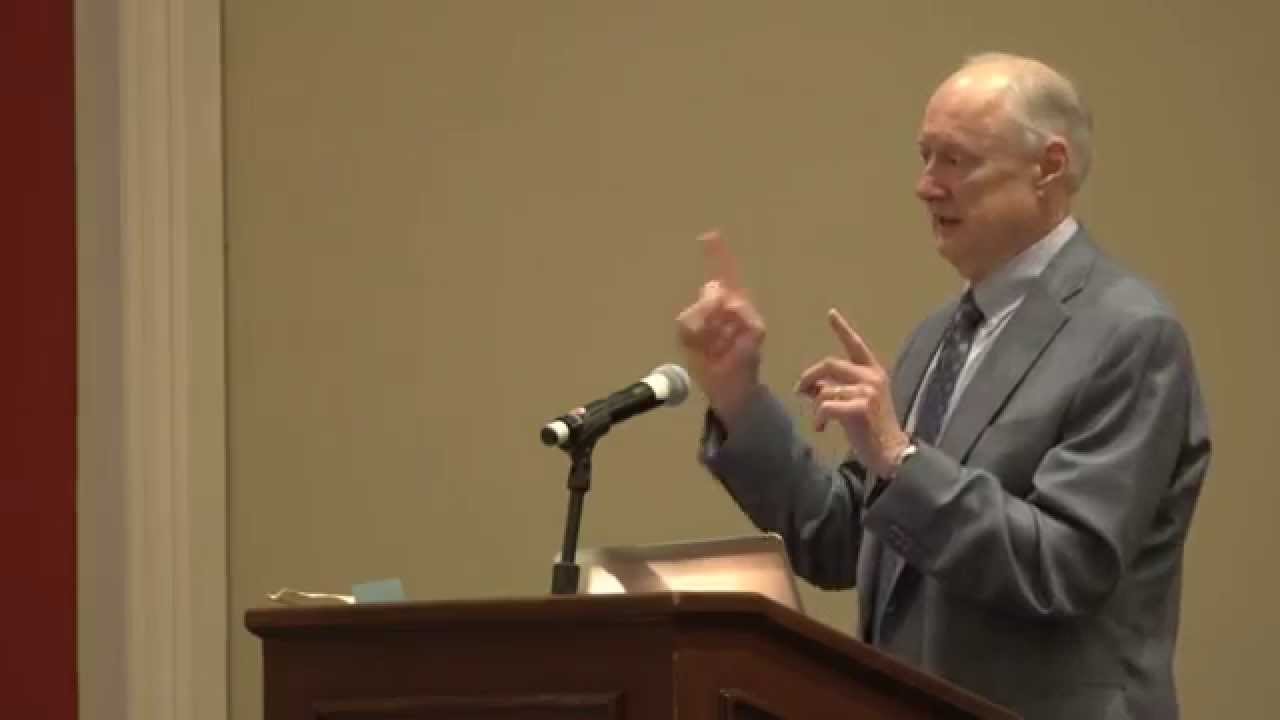
Snodgrass on a "Hermeneutics of Identity"

Klyne Snodgrass discusses a “hermeneutics of identity.” Snodgrass repeatedly observes the New Testament’s concern with issues related to identity.

February 22, 2010 · 1 min · J. David Stark

Mid-February Biblioblog Top 50

Jeremy Thompson has mid-month biblioblog rankings available for the top 50 biblioblogs. Congratulations to Brian LePort and JohnDave Medina, who have cracked the top 50 for the first time, and to Joel Watts who continues to lead the pack. The full list, including some additions, will again be available at the month’s end.

February 18, 2010 · 1 min · J. David Stark

Defining "Theological Interpretation"

This morning, Scot McKnight has an engaging post that addresses some ambiguities present in descriptions of “theological interpretation.” To move toward decreasing these ambiguities, McKnight proposes his own description of what interpreting scripture theologically should mean—namely, “read[ing] individual passages in the Bible through the lens of one’s orthodox, community-shaped, and confessional theology” (italics original). Read the whole post, particularly the concluding paragraphs, for some other, very good reflections on the interrelationships between theology and hermeneutics. ...

February 17, 2010 · 1 min · J. David Stark

Create Your Own Feed for DaveBlackOnline

Various people have expressed, at different points, the wish that David Black’s blog had its own feed, but Google Reader users can now have this feed—somewhat. Last week, the Official Google Reader Blog announced an update to Google Reader that allows individual users, much as they would add any normal feed within Reader itself, to have Google Reader watch for changes on any webpage. ...

February 4, 2010 · 1 min · J. David Stark

Biblical Studies Carnival XLX

Biblical Studies Carnival XLX is available at Abnormal Interests in two sections: one based on submitted posts and the other based on Duane Smith’s own blog reading and interests. HT: James McGrath

February 1, 2010 · 1 min · J. David Stark

Biblioblog Rankings (January, 2010)

Jeremy Thompson has the automated, monthly Alexa chart available for a short(er) list of 237 biblioblogs for which Alexa reported rating data. This month, New Testament Interpretation saw a bump up to slot 156, and not surprisingly, Joel Watts tops the chart. ...

January 31, 2010 · 1 min · J. David Stark

In the Biblioblogs

In the past few days, there have been several very interesting posts around the biblioblogosphere. To highlight some of those posts here: Tommy Wasserman reports the new online presence of Bodmer 25 (GA 556) and, at Münster’s Virtual Manuscript Room, another 60 manuscripts as well. This morning also sees the beginning of a series in which Philip Payne is critically responding to Peter Head’s contention that the distigmai in Vaticanus “mark[] textual variation” and “belong to one unified system that was added some time in the 16th century.” John Anderson has an excellent and substantive interview with Richard Hays (HT: Stephen Carlson), and Andy Rowell has compiled a complementary bibliography of Richard Hays resources (HT: Mark Goodacre). Nijay Gupta has posted an interview with Gordon Fee (HT: Thomas) and the first part of an interview with Craig Keener, as well as a link to a website that is identifying free, online, public-domain Loeb Classical Library volumes. Jeremy Thompson has automated the compilation of a new biblioblog Alexa ranking list (HT: Mark Goodacre). On a similar note, the Official (Unofficial) Biblioblog List has undertaken the task of maintaining an updated list of biblioblogs (HT: Joseph Kelly) and, as of this morning, the task of maintaining a current biblioblog search engine. The Official (Unofficial) Biblioblog List also makes available HTML code that will restore a biblioblog badge that has become non-functional with the password protection of the Biblioblog Top 50.

January 13, 2010 · 2 min · J. David Stark

Jim West Is Back

With a post titled “Why?”, Jim West has reentered the biblioblogging sphere at http://zwingliusredivivus.wordpress.com/, still reflecting the new title that he gave to http://jwest.wordpress.com/ shortly before he deleted that blog. Although the first post at Zwinglius Redivivus ostensibly presents a quotation from Calvin regarding apostolic vocation, it has some amusing inter-(hyper)textual connections with Dr. Jim West (the blog) and Zwinglius Redivivus. ...

January 9, 2010 · 1 min · J. David Stark

Independent Biblioblog Ranking Compilation (December 2009)

With the Biblioblog Top 50 moving to a semi-annual cycle, Joseph Kelly over at כל־האדם has independently compiled a chart of December’s individual Alexa rankings to finish out 2009. Jim West (a.k.a. Zwinglius Redivivus) continues to fill the top slot, and the big movers among the top 50 this month include John Hobbins ( Ancient Hebrew Poetry, up 15 spaces to number 16); Jason ( εις δοξαν, up 18 spaces to number 40); Michael Barber, Brant Pitre, and John Bergsma ( The Sacred Page, up 25 spaces to number 48); and Joel Hoffman ( God Didn’t Say That: Bible Translations and Mistranslations, up 33 spaces to number 49). New Testament Interpretation stands this month at number 213. ...

December 31, 2009 · 1 min · J. David Stark

2010 SECSOR Presentation

A few weeks ago, I received confirmation that my paper, “‫ מורה הצדק‬ as a Hermeneutical Functionary in the Qumran Sectarian Manuscripts,” has been accepted for presentation at the 2010 meeting of the Southeastern Commission for the Study of Religion. Here is a brief abstract: Although a good deal of work has been done on the hermeneutical method(s) found at Qumran, to date, insufficient attention has been given to the presuppositional matrix that allowed these methods to function at Qumran as they did. For, after all, considered in themselves, theses and interpretations appear valid not primarily because of the method by which they were derived but because of the perceived fit between a given thesis and an accepted worldview paradigm. Therefore, this paper will seek to show: (1) that ‫מורה הצדק‬ ( the teacher of righteousness) himself definitively determined the Qumran community’s hermeneutical matrix in certain, specific respects and (2) that these specific determinations helped the Qumran community understand their scriptures in conjunction with what they knew to be their own, special position in ‫’יהוה‬s plan for Israel. ...

December 4, 2009 · 2 min · J. David Stark

Biblical Studies Carnival 48

Clayboy has this month’s Biblical Studies Carnival organized mostly into straight, topical lists and hopes to provide subsequently some additional reflections “on whither the [ballooning] Carnival might go in future years.”

December 1, 2009 · 1 min · J. David Stark

Biblioblog Top 50 (November 2009)

Despite a self-enforced blogging hiatus to complete an ETS paper that was almost itself three things that were never satisfied and four that never said enough (cf. Prov 30:15b), New Testament Interpretation rose 17 spaces in November to slot 134 from the drop to 151 that it had seen the previous month at the front of the hiatus. Thanks to everyone for their interest even during the break. I trust this post will constitute a return to a more active NTI. ...

December 1, 2009 · 1 min · J. David Stark

Bookshelf Updates

Subheadings have now come to the bookshelf. Some of the lists of works under main headings had become quite long and unwieldy, but the subheadings should help minimize the length of the individual lists. While additional subsections will certainly be required as the bookshelf grows, the sections presently large enough to demand subheadings include Gospels ( Jesus, parables) and hermeneutics ( biblical interpretation, general hermeneutics, methodology). ...

November 2, 2009 · 1 min · J. David Stark

Biblioblog Top 50 (September 2009)

Per the Biblioblog Top 50, New Testament Interpretation actually rose 74 spaces in August to 104. Thanks very much to everyone for their interest last month.

October 1, 2009 · 1 min · J. David Stark

Stark Savings

Earlier this week, my wife, Carrie, started blogging at Stark Savings with some of the mass of the great deals that she finds and assorted other money-saving tips. The shopping results in her post from Tuesday about her most recent trip to Harris Teeter are pretty typical. Somehow, I doubt that Stark Savings will come up in the list of biblioblogs and related blogs any time soon, but it could work: getting better deals > spending less money > having more money > buying more books about biblical studies. Or, maybe not ;-). In any case, particularly any biblical studies students or their family members who read this blog may also want to check out Stark Savings. ...

September 24, 2009 · 1 min · J. David Stark

Biblioblog Unit Steering Committee Formed

Jim West reports that the steering committee for the Society of Biblical Literature’s Biblioblog Program Unit has been formed. The committee will initially consist of April DeConick, Mark Goodacre, Stephanie Fisher, and Robert Cargill. The committee will begin working with plans for the 2010 SBL meeting in Atlanta. ...

September 9, 2009 · 1 min · J. David Stark

Background Transparency for the Biblioblog-SBL Affiliate Badge

Thanks to Mark Hoffman for introducing a version of the Biblioblog-SBL Affiliate badge with a non-white background. With this color change, in an effort at collaborative improvement, I was able to get OpenOffice.org Draw to translate this background to transparent for use on blogs or places on blogs with non-white backgrounds. ...

September 8, 2009 · 1 min · J. David Stark

In the Biblioblogs

A few recent, noteworthy posts in the biblioblogs: Michael Bird and Michael Whitenton have an article in the newest issue of New Testament Studies: “The Faithfulness of Jesus Christ in Hippolytus’s De Christo et Antichristo: Overlooked Patristic Evidence in the Πίστις Χριστοῦ Debate.” ...

September 3, 2009 · 1 min · J. David Stark

Keeping Things in Perspective

In mid-June, I posted a review of Paul Silvia’s book How to Write a Lot with an additional tool for tracking writing progress. Yet, for academic work, non-productive non-writing time can be at least as important as important: Is academic writing more important than spending time with your family and friends, petting the dog, and drinking coffee? A dog unpetted is a sad dog; a cup of coffee forsaken is caffeine lost forever. Protect your real-world time just as you protect your scheduled writing time ( Silvia 132). ...

August 12, 2009 · 1 min · J. David Stark

Site Updates

For the past several weeks, I have been working on some reasonably substantial changes to the site that should make it more useful and beneficial. With these changes completed and my comprehensive exams on the horizon (in both a hermeneutical and a temporal sense), I hope to begin regularly posting again quite soon. For anyone who may be interested, the following are among the most significant of changes to the site: ...

August 3, 2009 · 5 min · J. David Stark

New Bookshelf Section

The bookshelf has a new section on faith and scholarship, which (for starters) includes the following works: [caption id=“attachment_2085” align=“alignleft” width=“80” caption=“Philip Davies”] [/caption] [caption id=“attachment_2137” align=“alignleft” width=“80” caption=“George Marsden”] [/caption] [caption id=“attachment_2136” align=“alignleft” width=“80” caption=“Mark Noll”] [/caption] ...

July 3, 2009 · 1 min · J. David Stark

Blogging and Biblical Studies: Thoughts from N. T. Wright and Thomas Kuhn

In his Justification: God’s Plan and Paul’s Vision, N. T. Wright reflects: It is really high time we developed a Christian ethic of blogging. Bad temper is bad temper even in the apparent privacy of your own hard drive, and harsh and unjust words, when released into the wild, rampage around and do real damage. . . . [T]he cyberspace equivalents of road rage don’t happen by accident. People who type vicious, angry, slanderous and inaccurate accusations do so because they feel their worldview to be under attack. Yes, I have a pastoral concern for such people. (And, for that matter, a pastoral concern for anyone who spends more than a few minutes a day taking part in blogsite discussions, especially when they all use code names: was it for this that the creator God made human beings?) ( Wright 26–27; cf. Köstenberger, “Internet Ettiquette”; Köstenberger, “Internet Ettiquette, Part 2”).1 ...

June 25, 2009 · 5 min · J. David Stark

ΠΑΡΑΛΕΙΠΟΜΕΝΑ: From Page to Category

Over the past several weeks, I’ve become convinced that the Παραλειπόμενα page would be more serviceable as a post category. Below are the current παραλειπόμενα not also included in other posts; a complete selection of the παραλειπόμενα can be obtained by clicking the παραλειπόμενα category link. ὁ δὲ εἶπεν αὐτοῖς· διὰ τοῦτο πᾶς γραμματεὺς μαθητευθεὶς τῇ βασιλείᾳ τῶν οὐρανῶν ὅμοιός ἐστιν ἀνθρώπῳ οἰκοδεσπότῃ, ὅστις ἐκβάλλει ἐκ τοῦ θησαυροῦ αὐτοῦ καινὰ καὶ παλαιά ( And he said to them, “Therefore, every scribe who has been taught for the kingdom of the heavens is like a man who is a master of a house, who brings forth from his storeroom new and old things”; Matt 13:52) “[I]t is better for [people] to find you [O God] and leave the question unanswered than to find the answer without finding you” ( Augustine 1.6; affiliate disclosure). “If you can’t imagine how anyone could hold the view you are attacking, you just don’t understand it yet” ( Weston 6; affiliate disclosure). “I have never been able to give myself the comfort which some devout believers seem to derive from a contemptuous attitude toward men on the other side of the great debate; I have never been able to dismiss the ‘higher critics’ en masse with a few words of summary condemnation” (J. Gresham Machen, quoted in Baird 352; affiliate disclosure). עשות ספרים הרבה אין קץ ולהג הרבה יגעת בשר ( Of the making of many books there is no end, and much study is the weariness of the bones; Eccl 12:12). “We do God’s work for our brothers and sisters when we learn to listen to them. So often Christians, especially preachers, think that their only service is always to have to ‘offer’ something when they are together with other people. They forget that listening can be a greater service than speaking. Many people seek a sympathetic ear and do not find it among Christians, because these Christians are talking even when they should be listening. But Christians who can no longer listen to one another will soon no longer be listening to God either; they will always be talking even in the presence of God. The death of the spiritual life starts here, and in the end there is nothing left but empty spiritual chatter and clerical condescension which chokes on pious words. Those who cannot listen long and patiently will always be talking past others, and finally no longer will even notice it. Those who think their time is too precious to spend listening will never really have time for God and others, but only for themselves and for their own words and plans” ( Bonhoeffer 98; affiliate disclosure). καὶ ἐδικαιώθη ἡ σοφία ἀπὸ τῶν ἔργων αὐτῆς ( And wisdom is justified by her deeds; Matt 11:19). “The New Testament is concerned with proclamation. It is a Kerygma, the loud cry of a herald authorized by a king to proclaim his will and purpose to his subjects. It is Euangelion, good news, sent to those who are in distress with the promise of deliverance. It is the Word of the Lord—and in the East a word is no mere vibration in the atmosphere, it is a living power sent forth to accomplish that for which it is sent” ( Neill and Wright 448–49; italics original; affiliate disclosure). “[T]he hermeneutical task involves both distance, in which account is taken of the particularity of the text, and also a progress towards as close a fusion of horizons with the text as the relation between text and interpreter will allow” ( Thiselton 440; emphasis original; affiliate disclosure). ὁ ἀφʼ ἑαυτοῦ λαλῶν τὴν δόξαν τὴν ἰδίαν ζητεῖ ( He who speaks from himself seeks his own glory; John 7:18).
May 17, 2009 · 3 min · J. David Stark

Blogroll Updates

The blogroll has been updated and transferred from its own page to a sidebar widget. Also, Greek blog titles are now alphabetized according to the Greek alphabet rather than their transliteration. So, for example, titles beginning with (Greek) epsilon are alphabetized after titles beginning with (English) gee. Look for several additions to appear in the coming days.

March 17, 2009 · 1 min · J. David Stark

Greek Resources: Links Updated

The link list on the Greek resources page has been updated and expanded to include some additional, online resources for studying New Testament Greek and the Greek New Testament.

March 13, 2009 · 1 min · J. David Stark

New Testament Greek Resources

A new page is now available that will eventually house several resources for learning New Testament Greek. Currently, the page features MP3 audio recordings of the basic verb and noun paradigms as well as some songs that have been translated into Greek. Repeatedly hearing these paradigms and the songs in which they are used can provide one more way of cementing New Testament Greek in memory. Right now, the Greek resources page basically reflects my old faculty page at Faulkner University, but expect more material to become available and a more friendly organization to develop over the coming weeks. ...

March 6, 2009 · 1 min · J. David Stark

The Interpretation of the New Testament, 1861–1986: Interaction

[caption id=“attachment_668” align=“alignleft” width=“80” caption=“Stephen Neill and N. T. Wright”] [/caption] Neill’s stated purpose for his book was “to provide a narrative [about the interpretation of the New Testament] that can be read without too much trouble by the non-theologian who is anxious to know and is prepared to devote some time to the subject” ( ix). This task he seems to have done masterfully well, with a comparatively frugal use of footnotes to set forth “the necessary apparatus of scholarship” ( ix). While this history might have proved tedious, Neill has managed to produce a cogent narrative that, at times, may well carry the interested student into the situation or the time being described. ...

February 20, 2009 · 2 min · J. David Stark