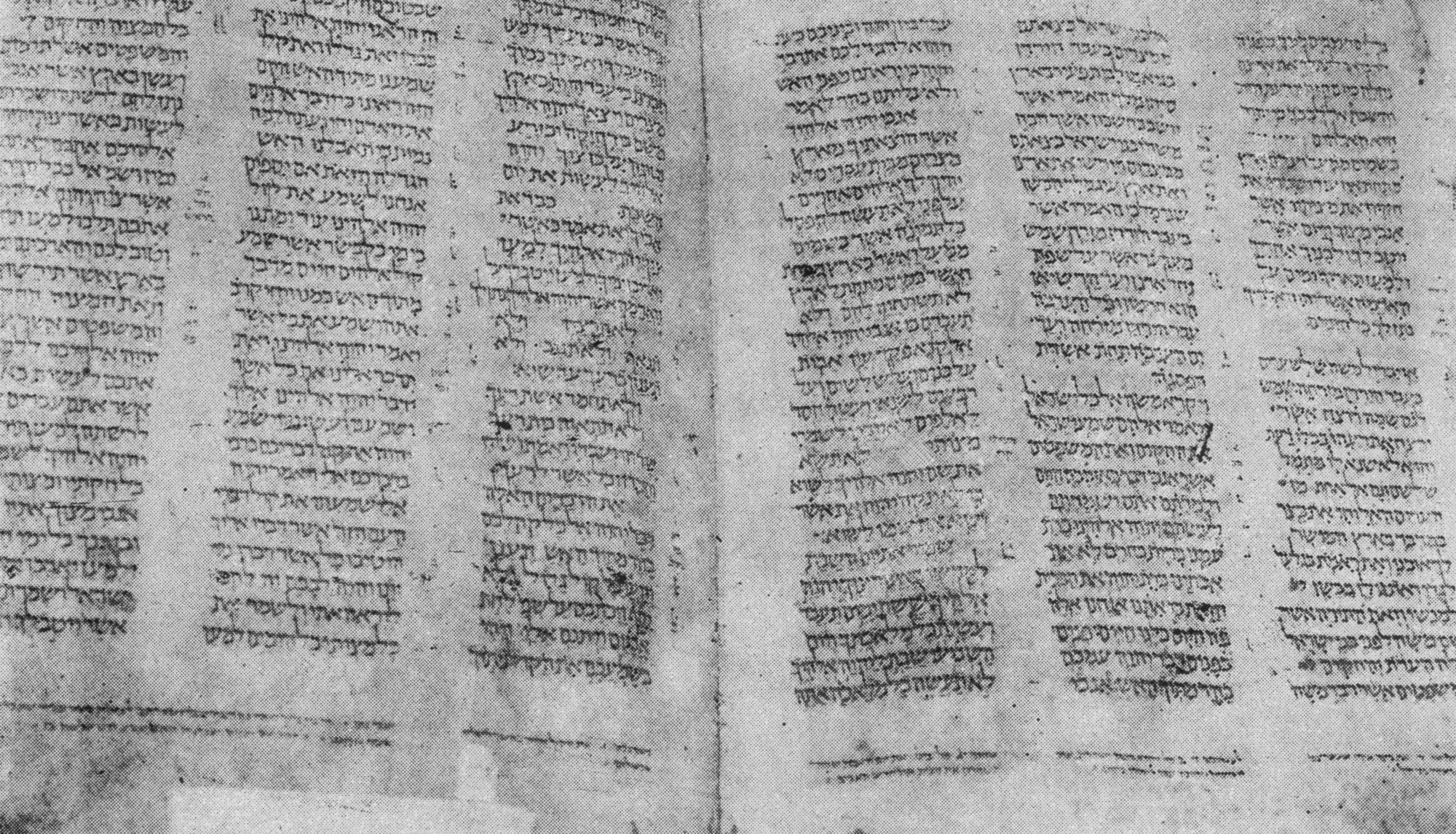
How to Find Your Way around the Aleppo Codex
Printed texts have their virtues. But sometimes you need to look at a manuscript. Here’s how to find your way around the Aleppo Codex.
Printed texts have their virtues. But sometimes you need to look at a manuscript. Here’s how to find your way around the Aleppo Codex.
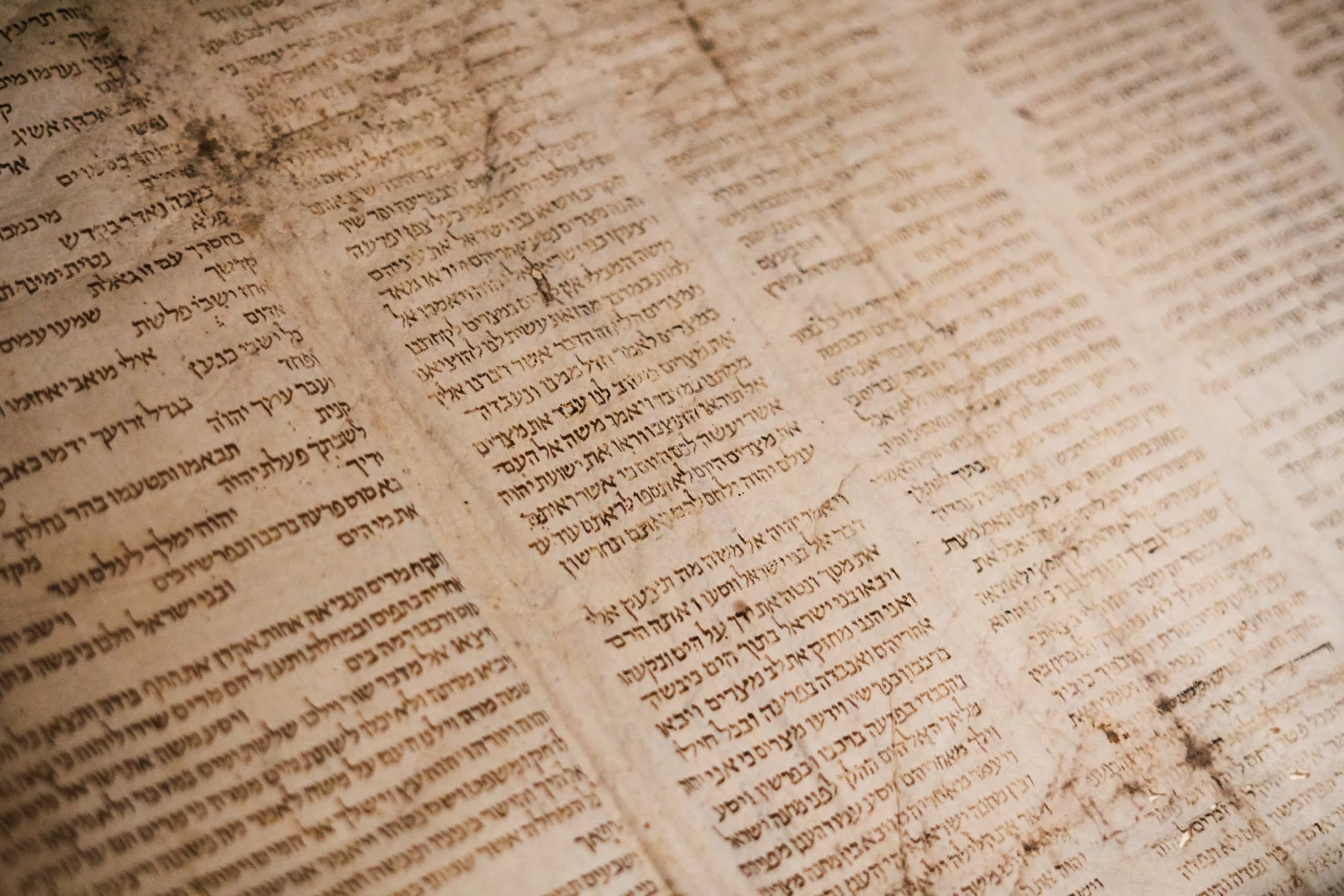
Okhlah we-Okhlah is a medieval compilation of information about the Hebrew Bible. Here are the basics about why it’s important and how to access it.
Daily Gleanings about Ziony Zevit’s edited volume, “Subtle Citation, Allusion, and Translation in the Hebrew Bible” and Jacques van Ruiten’s review.
Daily Gleanings about how to get the 21-volume “Assyrian Dictionary” via open access from the University of Chicago’s Oriental Institute.
Daily Gleanings about new releases from SBL Press on the theology and intertextuality of the Hebrew Bible.
Freedom discusses how to use their “block all except” whitelisting feature to block out distractions and interruptions. For more discussion of Freedom, see these prior posts. John Meade surveys ch. 4 of Ronald Hendel and Jan Joosten’s How Old Is the Hebrew Bible?(YUP, 2018) and promises a follow-up post “attempting to engage the authors on one of their examples from chapter 4 with a view to showing how they think diachony and TC work together.” ...
Logos 7 academic basic is available for free. Resources included are sufficient to get one’s feet wet in how biblical language research works in Logos.
On the Logos Talk blog, Mark Ward has a helpful post about techniques for having a “spring cleaning” in your Logos Bible Software library. The “collections” tool is especially helpful for associating different resources that logically go together for a given purpose (e.g., multiple sets of Patristic texts, multiple grammars). ...
Heiser, Supernatural The folks at Lexham Press have kindly sent along a copy of Michael Heiser’s book, Supernatural. Heiser holds a PhD in Hebrew Bible and Semitic Languages from the University of Wisconsin-Madison. Supernatural is a follow-up to Heiser’s previous volume Unseen Realm (Lexham, 2015; see Supernatural, 9). Both continue following up on themes Heiser previously explored in his doctoral thesis on “The Divine Council in Late Canonical and Non-Canonical Second Temple Jewish Literature” (2004). ...
The latest reviews in the Review of Biblical Literature include: Jewish Scriptures and Cognate Studies Richard J. Clifford, Wisdom, reviewed by Lawrence M. Wills David J. A. Clines and J. Cheryl Exum, eds., The Reception of the Hebrew Bible in the Septuagint and the New Testament: Essays in Memory of Aileen Guilding, reviewed by Benjamin J. M. Johnson Joan E. Cook, Genesis, reviewed by Jonathan L. Huddleston Avraham Faust, Judah in the Neo-Babylonian Period: The Archaeology of Desolation, reviewed by Gert T. M. Prinsloo James E. Harding, The Love of David and Jonathan: Ideology, Text, Reception, reviewed by Katherine Low Irene Nowell, Numbers, reviewed by Timothy R. Ashley Naomi Steinberg, The World of the Child in the Hebrew Bible, reviewed by Karin Finsterbusch New Testament and Cognate Studies ...
The Journal of Biblical Literature 133, no. 2 includes: Joram Mayshar, “Who Was the Toshav?” Amitai Baruchi-Unna, “Two Clearings of Goats (1 Kings 20:27): An Interpretation Supported by an Akkadian Parallel” Ryan E. Stokes, “Satan, Yhwh’s Executioner” Saul M. Olyan, “Jehoiakim’s Dehumanizing Interment as a Ritual Act of Reclassification” John L. McLaughlin, “Is Amos (Still) among the Wise?” Christine Mitchell, “A Note on the Creation Formula in Zechariah 12:1–8; Isaiah 42:5–6; and Old Persian Inscriptions” Kristian Larsson, “Intertextual Density, Quantifying Imitation” J. R. Daniel Kirk and Stephen L. Young, “‘I Will Set His Hand to the Sea’: Psalm 88:26 LXX and Christology in Mark” Jennifer Knust and Tommy Wasserman, “The Biblical Odes and the Text of the Christian Bible: A Reconsideration of the Impact of Liturgical Singing on the Transmission of the Gospel of Luke” Brittany E. Wilson, “The Blinding of Paul and the Power of God:Masculinity, Sight, and Self-Control in Acts 9” Brice C. Jones, “Three New Coptic Papyrus Fragments of 2 Timothy and Titus (P.Mich. inv. 3535b)” Nicola Denzey Lewis and Justine Ariel Blount, “Rethinking the Origins of the Nag Hammadi Codices” This issue also introduces the “JBL Forum,” which is intended to provide “an occasional series that will highlight approaches, points of view, and even definitions of ‘biblical scholarship’ that may be outside the usual purview of many of our readers. The format may vary from time to time but will always include an exchange of ideas on the matter at hand” (pg. 421). This issue’s forum includes: ...
J. Alan Groves Center The J. Alan Groves Center has released version 4.18 for the Westminster Leningrad Codex (WLC) and the Westminster Hebrew Morphology (WHM). According to the Center’s notice, this update includes: 41 sets of lemma changes, 85 sets of parsing changes, 16 textual changes with an associated change in bracket notes, the addition of the bracket note “]n” (which designates an unusual or unexpected form) to almost 100 words, 24 other changes to bracket notes, 5 other textual changes, and 5 changes to morphological slashes and/or word divisions. Changes to the text are to make the WHM and the WLC conform to the text of the Hebrew Bible found in the Leningrad Codex. ...
Scripture Tools for Every Person Tyndale House recently announced the beta release of their Scripture Tools for Every Person (STEP) project, headed by David Instone-Brewer. The resource includes a nice selection of original-language texts—apparently including some, like the [Samaritan Pentateuch](http://www.stepbible.org/#!__/0/passage/0/SP/Gen 1/NHV/__/1/singleColumn), not yet listed in the documentation. Later this year, the Tyndale House edition of the Greek New Testament should also appear in STEP. ...
To demonstrate the superiority of Jesus’ sacrifice to those previously offered under the Torah, the writer to the Hebrews quotes a version of Ps 40:6–8 (Eng; 40:7–9 HB; 39:7–9 OG; Heb 10:5–9). 1 In so doing, Hebrews fairly clearly situates its rendition of this psalm’s words as Jesus’ own (cf. Heb 10:10). 2 If one were to read the entire psalm in this direction however, 3 problems would seemingly arise (e.g., vv. 12–17 Eng). 4 ...