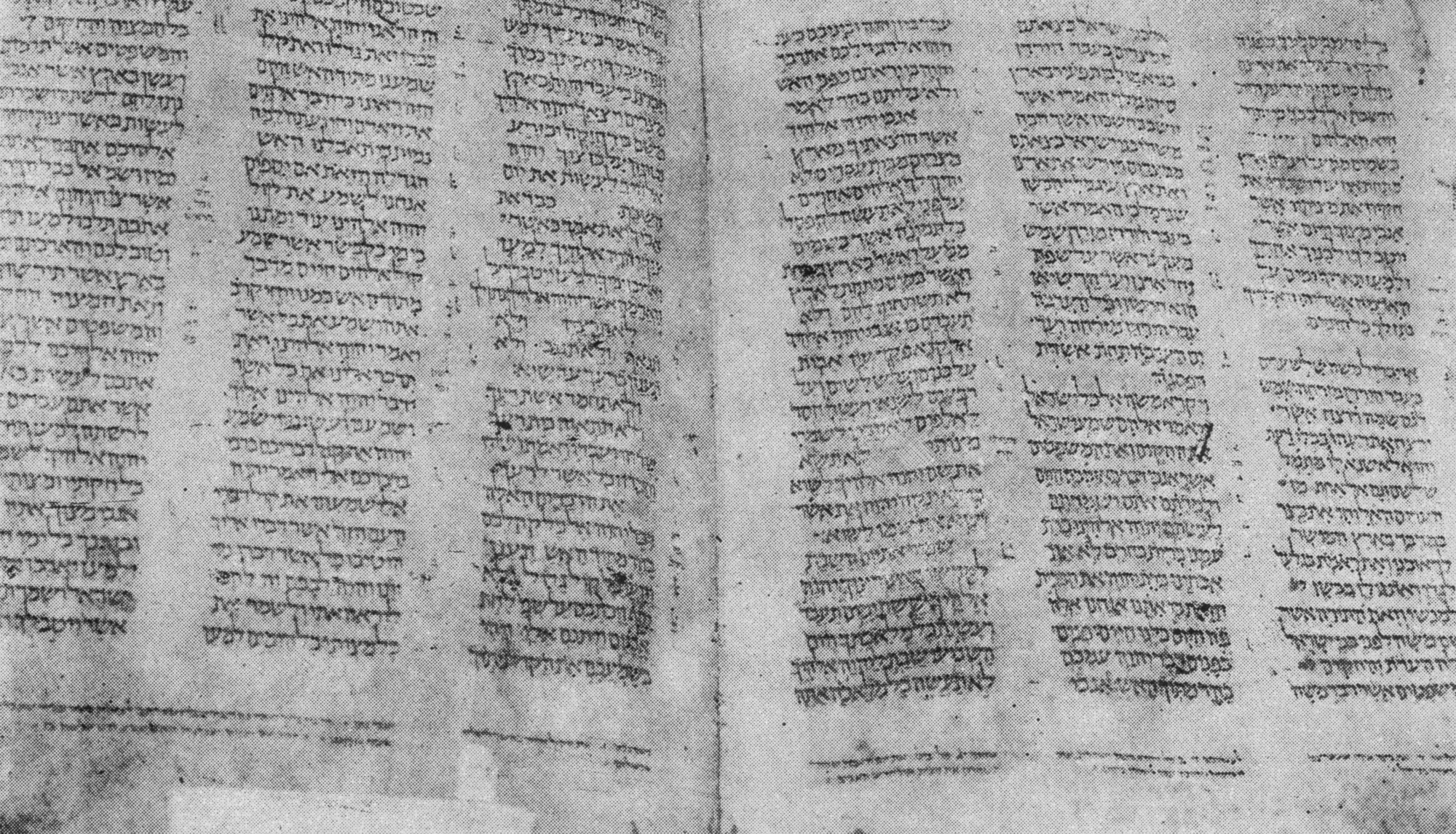
How to Find Your Way around the Aleppo Codex
Printed texts have their virtues. But sometimes you need to look at a manuscript. Here’s how to find your way around the Aleppo Codex.
Printed texts have their virtues. But sometimes you need to look at a manuscript. Here’s how to find your way around the Aleppo Codex.
Irenaeus of Lyons In his Against Heresies, Irenaeus argues that 666 is a particularly “fitting” number for the name of the beast in Rev 13:18: since he sums up in his own person all the commixture of wickedness which took place previous to the deluge, due to the apostasy of the angels. For Noah was six hundred years old when the deluge came upon the earth, sweeping away the rebellious world, for the sake of that most infamous generation which lived in the times of Noah. And [Antichrist] also sums up every error of devised idols since the flood, together with the slaying of the prophets and the cutting off of the just {cf. Matt 24:37–38/ Luke 17:26–27}. For that image which was set up by Nebuchadnezzar had indeed a height of sixty cubits, while the breadth was six cubits; on account of which Ananias, Azarias, and Misaël, when they did not worship it, were cast into a furnace of fire, pointing out prophetically, by what happened to them, the wrath against the righteous which shall arise towards the [time of the] end {cf. Matt 24:15/ Mark 13:14}. For that image, taken as a whole, was a prefiguring of this man’s coming, decreeing that he should undoubtedly himself alone be worshipped by all men {cf. Rev 13:15}. Thus, then, the six hundred years of Noah, in whose time the deluge occurred because of the apostasy, and the number of the cubits of the image for which these just men were sent into the fiery furnace, do indicate the number of the name of that man in whom is concentrated the whole apostasy of six thousand years, and unrighteousness, and wickedness, and false prophecy, and deception; for which things’ sake a cataclysm of fire shall also come [upon the earth]. (Irenaeus, Against Heresies, 5.29.2 [ ANF 1:558; affiliate disclosure] square brackets original; curled brackets added) ...
The Larger Cambridge Septuagint project, The Old Testament in Greek according to the Text of Codex Vaticanus, had 9 fascicles published from 1909 to 1940. These fascicles are available in full-text PDFs via Internet Archive: Octateuch and Later Historical Books((For making me aware of this section, I’m grateful to Karen Jobes and Moíses Silva, Invitation to the Septuagint, 2nd ed. ( affiliate disclosure), 68n12.)) Esther, Judith, Tobit Although the Larger Cambridge series is incomplete and has been superseded by the Göttingen edition, the volumes are still quite valuable and, for the texts they cover, perhaps also much more accessible than the corresponding Göttingen volumes. ...
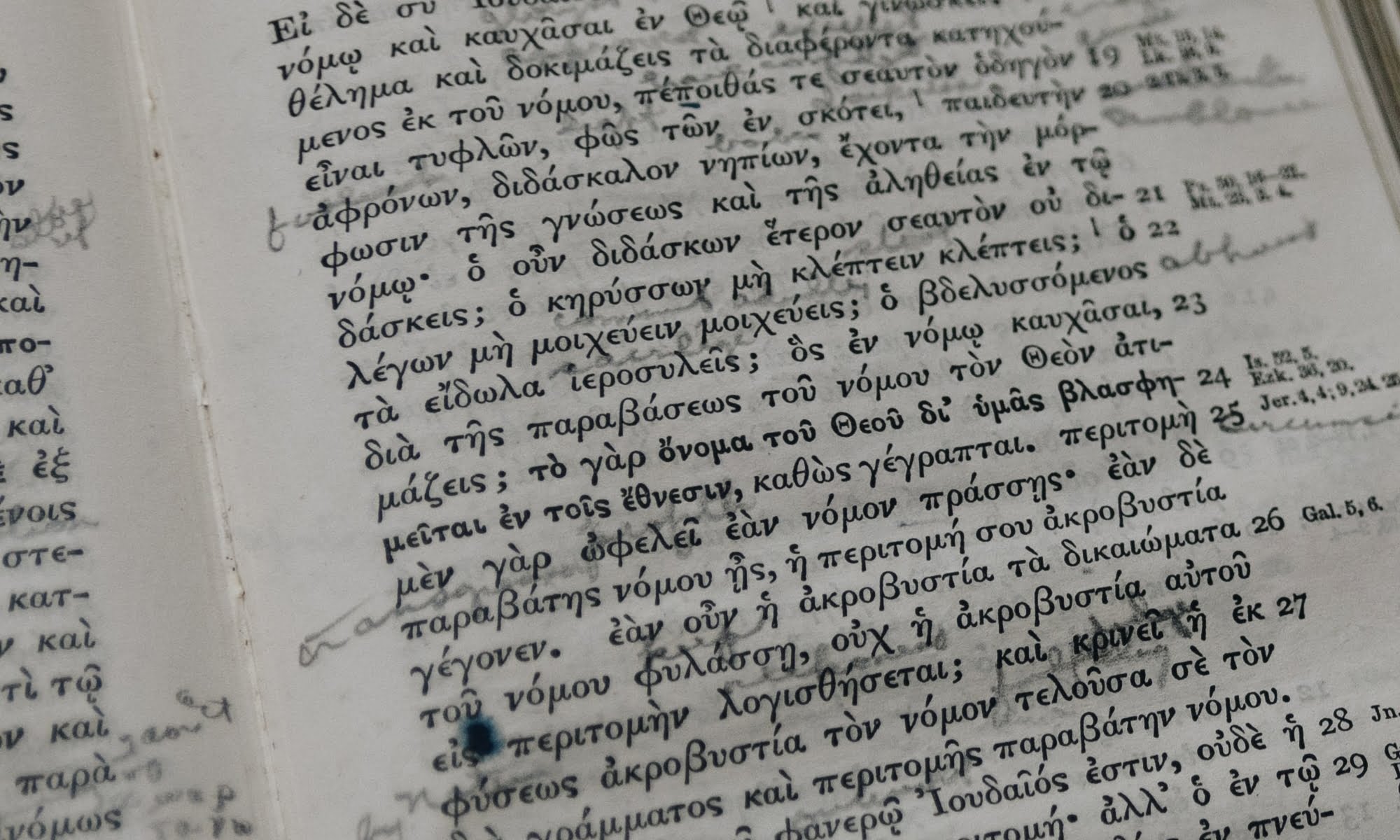
In INTF’s database, sometimes a transcription isn’t available or a manuscript image is harder to read. In these cases, check external image repositories.
With the document ID handy, INTF’s Liste search makes it quite easy to see additional information about that manuscript—and possibly the manuscript itself.
Once you understand INTF’s system, you can call up any manuscript in the database. For Greek New Testament witnesses, the document ID is a 5-digit sequence.
A modern Greek New Testament’s critical apparatus holds a wealth of information. When you’re uncertain what the apparatus means, consult the manuscripts.
Now available from Brill is Donald Parry’s treatment of the Dead Sea Isaiah scrolls and their variants.
Sarianna Metso’s edition of the Community Rule addresses all surviving witnesses for the Rule and includes a critical apparatus.
Katja Kujanpää discusses Paul’s quotation in Rom 11:35 and argues that it comes not from Job 41:3 but from Isa 40:14.
Pasi Hyytiäinen discusses the “Evolving Gamaliel Tradition in Codex Bezae Cantabrigiensis, Acts 5:38–39.”
Peter Gurry distills five lessons for budding scholars. Textual criticism isn’t something you can afford to ignore if you’re dealing with the biblical text.
Daily Gleanings about 1 Enoch and the problems with establishing a Second Temple period text for it.
Daily Gleanings about the importance of doing textual criticism on the texts of church fathers.
Daily Gleanings about the problems of studying scribal habits via work on singular readings.
Daily Gleanings from Peter Gurry about textual criticism and preferences regarding explanations from intentional and unintentional changes.
Daily Gleanings about newly digitized fragments of MS 967 containing Greek text of Ezekiel.
Daily Gleanings about Martha as an interpolation in John’s gospel.
Daily Gleanings about Siegfried Kreuzer’s “Introduction to the Septuagint.”
Daily Gleanings with Peter Gentry on his Göttingen volume for Ecclesiastes and continuing comment from Peter Gurry on the Johannine comma.
Daily Gleanings about manuscript structure (ektheses) and using Patristic citations for textual criticism of the Greek New Testament.
Daily Gleanings from Dan Wallace about CSNTM and Roger Pearse about the longevity of manuscripts in antiquity.
Daily Gleanings from John Meade about the Göttingen Septuagint volume for Ecclesiastes and Peter Gurry on the Johannine comma’s origin story.
Daily Gleanings about the Göttingen Septuagint volume on Ecclesiastes and possible new fragments of 1 Corinthians.
Daily Gleanings from Logos about plotting search results on a timeline and from William Ross about the Song of Songs in Greek.
Daily Gleanings from Richard Middleton on Christian worldview and ethics and from Larry Hurtado on scribal and readerly changes.
Daily Gleanings about the Muratorian fragment and the expansion of one’s English vocabulary through reading German texts.
Daily Gleanings from Brice Jones about P.Oxy. 83.5345 (a “first-c.” Mark fragment) and Larry Hurtado about Darina Staudt’s, “Der eine und einzige Gott.”
Daily Gleanings about Mike Aubrey’s discussion of new books in Greek linguistics and Mark Ward’s review of Dirk Jonkind’s “Introduction to the GNT.”
Daily Gleanings about multi-spectral images from CSNTM and an open access series from Gorgias in partnership with De Gruyter.