Daily Gleanings: Textual Criticism (29 July 2019)
Daily Gleanings about the Göttingen Septuagint volume on Ecclesiastes and possible new fragments of 1 Corinthians.
Daily Gleanings about the Göttingen Septuagint volume on Ecclesiastes and possible new fragments of 1 Corinthians.
Gleanings from the 2019 Stone-Campbell Journal Conference. Topics include New Testament studies, archaeology, Acts, 1 Corinthians, and Christian education.
Gabriel Vasquez was a Jesuit theologian from the late 16th and early 17th centuries. Vasquez’s commentary on Thomas Aquinas has been made available online.
Google Books has full-text PDFs available for both volumes of Frédéric Godet’s “Première épitre aux Corinthiens.”
Since the last time I mentioned the Journal of Greco-Roman Christianity and Judaism, several new articles have been posted to the 2016 volume. These are: Preston T. Massey, “Women, Talking and Silence: 1 Corinthians 11.5 and 14.34-35 in the Light of Greco-Roman Culture Hughson T. Ong, “The Language of the New Testament from a Sociolinguistic Perspective” Jonathan M. Watt Geneva, “Semitic Language Resources of Ancient Jewish Palestine” Stanley E. Porter, “The Use of Greek in First-Century Palestine: A Diachronic and Synchronic Examination” For context, the latter three essays are introduced by the additional entry “The Languages Of First-Century Palestine: An Introduction To Three Papers.” ...
The latest reviews from the Review of Biblical Literature include: Markus Bockmuehl and Guy G. Stroumsa, eds., Paradise in Antiquity: Jewish and Christian Views, reviewed by Pieter G. R. de Villiers Tony Burke, ed., Ancient Gospel or Modern Forgery?: The Secret Gospel of Mark in Debate: Proceedings from the 2011 York University Christian Apocrypha Symposium, reviewed by James F. McGrath Andrew R. Davis, Tel Dan in Its Northern Cultic Context, reviewed by Bob Becking and by Aren M. Maeir Stephen Finlan, The Family Metaphor in Jesus’ Teaching: Gospel Imagery and Application, reviewed by Joanna Dewey Kai Kaniuth, Anne Löhnert, Jared L. Miller, Adelheid Otto, Michael Roaf, and Walther Sallaberger, eds., Tempel im Alten Orient, reviewed by Jeffrey L. Morrow Emma Loosley, The Architecture and Liturgy of the Bema in Fourth- to-Sixth-Century Syrian Churches, reviewed by Robert Morehouse Elvira Martín Contreras and Guadalupe Seijas de los Ríos-Zarzosa, Masora: La transmisión de la tradición de la Biblia Hebrea, reviewed by Amparo Alba Cecilia Halvor Moxnes, Jesus and the Rise of Nationalism: A New Quest for the Nineteenth Century Historical Jesus, reviewed by Craig A. Evans Pheme Perkins, First Corinthians, reviewed by H. H. Drake Williams III
Gerbrand van den Eeckhout, ‘Anna Presenting Her Son Samuel to the Priest Eli’ In due order within The City of God’s longer discussion of Hannah’s prayer at Samuel’s dedication, 1 Augustine arrives at the clause, “[a]nd [he] shall exalt the horn of His Christ” ( 1 Sam 2:10). Here, Augustine ponders: ...
On the web: Jim Davila reports the discovery of some previously lost Greek homilies on the Psalms, potentially by Origen ( 1, 2). Peter Williams provides a link to a set of images of the manuscript. Roger Pearse comments on the press release and quotes Jerome’s catalogue of Origen’s writings. Alin Suciu passes along a letter from Lorenzo Perrone, provides several updates on the discussion, and releases a guest post from Mark Bilby. Dirk Jongkind comments on a textual variant in the text’s quotation of 1 Corinthians.
The latest issue of Currents in Biblical Research includes: J. Kenneth Kuntz, “Continuing the Engagement: Psalms Research Since the Early 1990s” Joel R. White, “Recent Challenges to the communis opinio on 1 Corinthians 15.29” Dan Batovici, “The Second-Century Reception of John: A Survey of Methodologies” Benjamin Edsall, " Kerygma, Catechesis and Other Things We Used to Find: Twentieth-Century Research on Early Christian Teaching since Alfred" Simon Lasair, “Current Trends in Targum Research”
The folks at the Bulletin for Biblical Research have very kindly agreed to publish a revised version of my presentation from the November, 2009 meeting of the Evangelical Theological Society: “Rewriting Prophets in the Corinthian Correspondence: A Window on Paul’s Hermeneutic.” To provide just a bit fuller picture of the essay’s argument: In the broadest sense of the phrase, any use of Jewish scripture by a later author(s) could be understood to constitute a form of ‘rewritten Bible’. The phrase ‘rewritten Bible’ has, however, come to have a technical meaning whereby it designates a certain body of ancient, Jewish literature. The precise shape of this body of literature continues to be debated, but even with consensus on this specific point as far away as it is, ‘rewritten Bible’ can contribute valuable information to the study of Paul’s use of scripture. In particular, ‘rewritten Bible’ provides a useful foil for the study of Paul’s citations in 1 Cor 1:31 and 2 Cor 10:17 and the hermeneutical paradigm upon which these citations’ validity implicitly rests. In this case, Paul’s connections with ‘rewritten Bible’ literature especially help suggest the constitutive, hermeneutical role that Jesus played as Paul interpreted scripture for the Corinthian church within the broader context of some of the hermeneutical traditions of his near contemporaries. ...

The “proxy baptism” interpretation of 1 Cor 15:29 arises early. To it, various responses emerge as authors grapple with competing traditions.
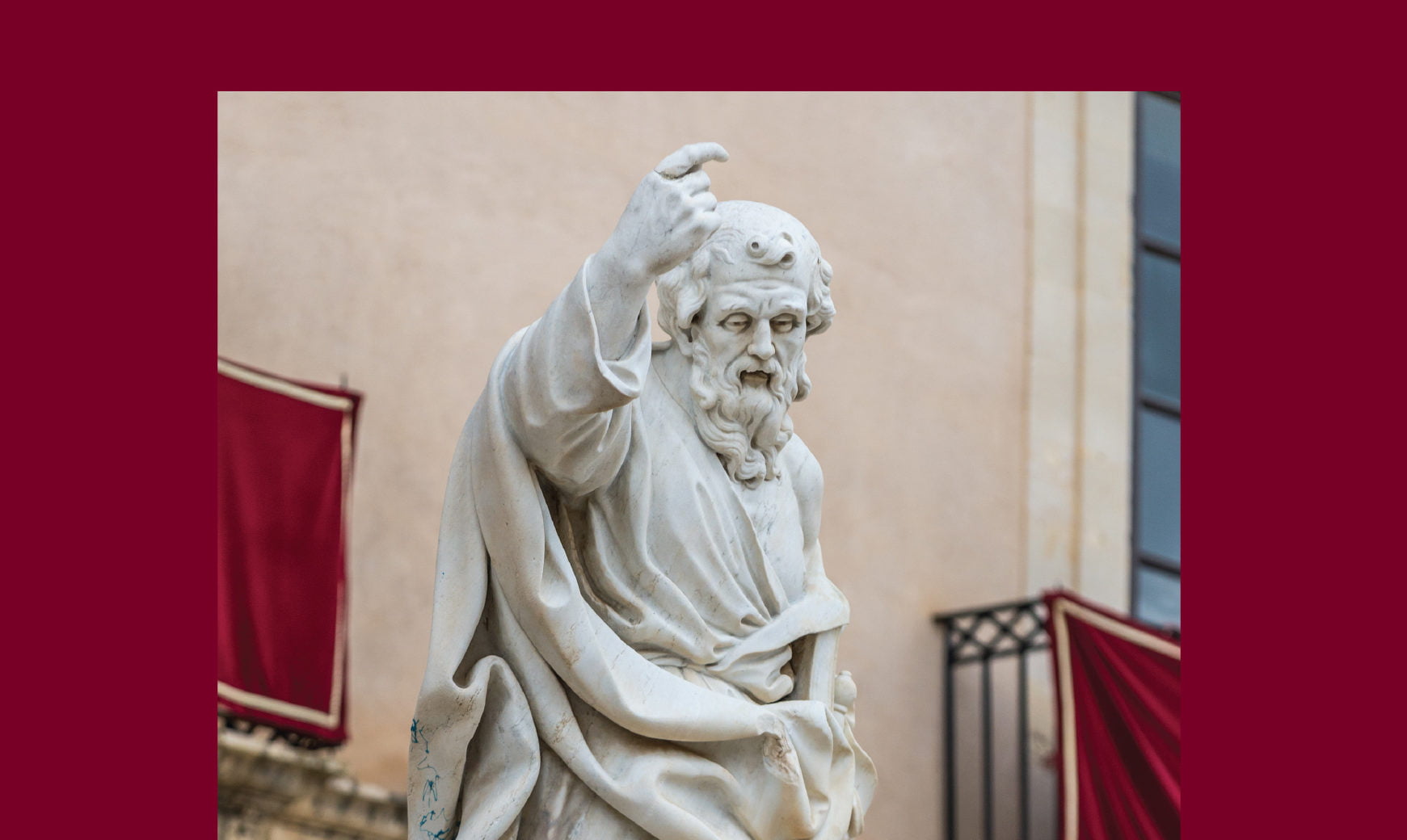
Paul’s engagement with Scripture is extraordinarily complex. This volume helps you unpack that engagement.