
To Be Productive, You Need to Be Adaptable
Adaptability is central to productivity. Especially amid life’s complexities, to stay productive, you need to stay adaptable and open.
Adaptability is central to productivity. Especially amid life’s complexities, to stay productive, you need to stay adaptable and open.
Once you understand INTF’s system, you can call up any manuscript in the database. For Greek New Testament witnesses, the document ID is a 5-digit sequence.
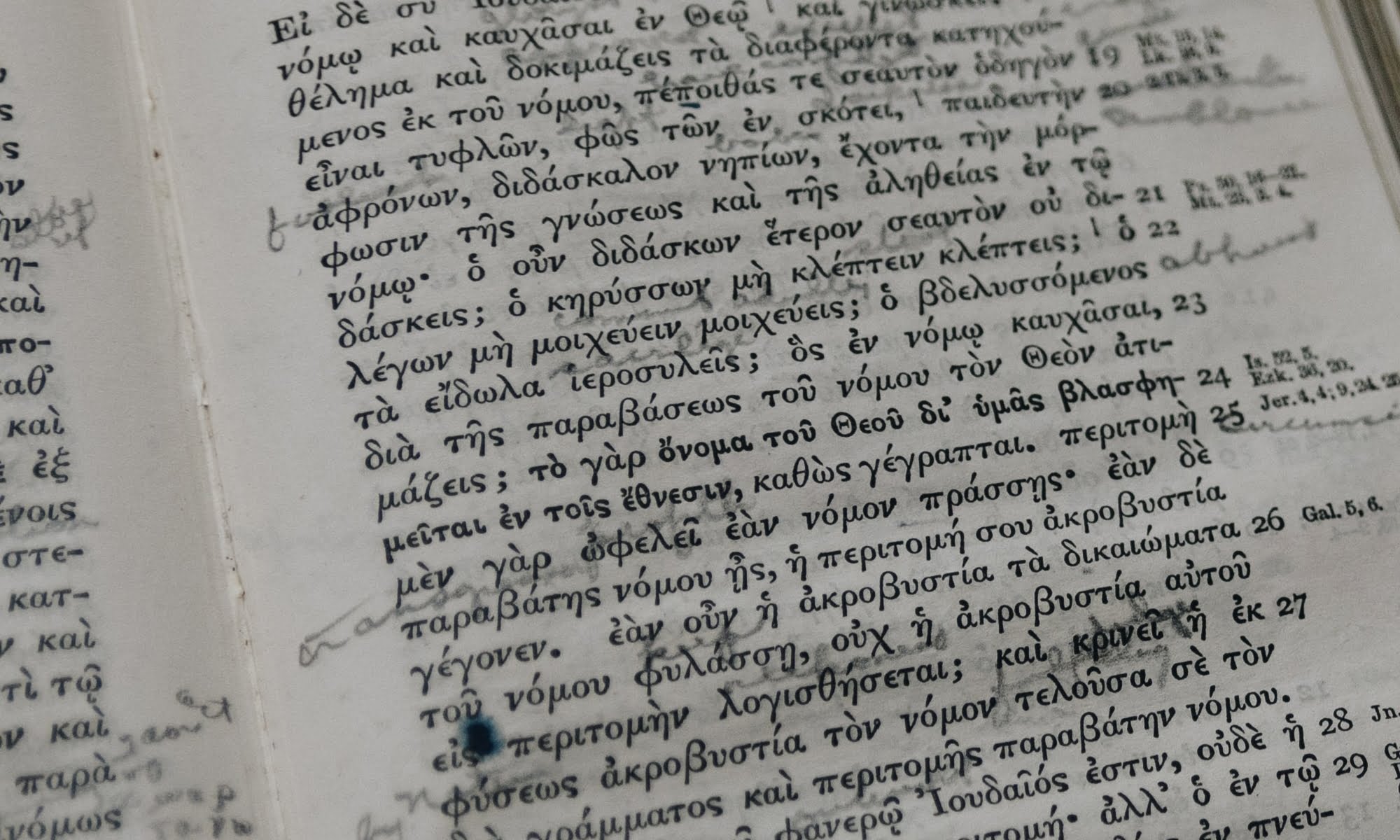
A modern Greek New Testament’s critical apparatus holds a wealth of information. When you’re uncertain what the apparatus means, consult the manuscripts.

To follow the “Student Supplement for The SBL Handbook of Style,” there are three key steps to editing the styles for your table of contents.
It’s not immediately clear how to customize some formatting for tables of contents. The key to make the formatting “stick” is to modify its styles.
Hildegard von Bingen Courtesy of Michael Barber, I have realized (somewhat belatedly) that Hildegard von Bingen has now been added to the list of “doctors of the church.” Like many, I have been very unfamiliar with Hildegard, but some of her hymnody is exceptional (e.g., Last.com, Pandora). ...
Microsoft Word can quickly create tables of contents so that the headings and page numbers update along with your document.

In Microsoft Word, a “style” is a collection of one or more pieces of formatting information. Styles are especially helpful when you use them to format your headings.

Alex Stewart provides a number of pro tips for busy writers in biblical studies. Alex stresses the importance of taking a long-term view of one’s writing.
David DeSilva provides several pro tips for busy writers in biblical studies. David stresses the importance of “no” and working on one project at a time.
I’m running an experiment with how to format the content that has been in the Daily Gleanings series.
Chris Bailey and James Clear, author of “Atomic Habits,” discuss habit formation and the impact that small habits can have.
The Database of Religious History tries to address the volume of scholarly literature being produced and the difficulty of keeping current with it all.
Gavin Ordlund’s “Theological Retrieval for Evangelicals” addresses a “‘me and my Bible’ approach to theology.”
Now available from Brill is Donald Parry’s treatment of the Dead Sea Isaiah scrolls and their variants.
Erik Fisher and Craig Jarrow discuss essential time management tools.
Sarianna Metso’s edition of the Community Rule addresses all surviving witnesses for the Rule and includes a critical apparatus.
Chris Tilling has a very fine two-part lecture on Karl Barth’s commentary on Romans.
Katja Kujanpää discusses Paul’s quotation in Rom 11:35 and argues that it comes not from Job 41:3 but from Isa 40:14.
Pasi Hyytiäinen discusses the “Evolving Gamaliel Tradition in Codex Bezae Cantabrigiensis, Acts 5:38–39.”
Michael Hyatt and Megan Hyatt Miller reflect on some “reasons you can’t stop working.”
To finish goals or projects that seem to drag on forever, try time keys or splitting things up into smaller units.
Instead of simply focusing on skill development, Scott Young suggests that “benchmark projects” will tend to be more effective.
Emmanuel Nataf outlines several concrete practices to develop in order to foster consistent writing.
Larry Hurtado reviews Archibald Hunter’s “Paul and His Predecessors.” The full text of the revised 1961 edition was available on Internet Archive.
Michael Hyatt suggests five reasons to cultivate the skill of gracefully saying no.

The guidance about page number placement in for SBL style long essays is clear enough. Achieving this placement in Word can be too with some simple steps.
Now a good five years in the making Alan Ng and Sarah Korpi, of the University of Wisconsin-Madison, have made openly available online a German grammar.
Stephen Altrogge provides a helpful introduction to time blocking as a way of creating and committing to space for deep work.
Logos Bible Software now offers gift cards so others can partner in building your Logos library.