
In many ways, Genesis is a book about division.1 Creation comes into being by division, like that between light and dark, land and water, earth and sky (Gen 1:1–12). The creation contains within it a diversity of creatures (e.g., Gen 1:21–2:3). And at the end of the primeval prologue, humanity’s common tongue diversifies into multiple languages (Gen 11:1–9).
But division isn’t only a theme within the text of Genesis. Often enough, the book is also the subject of division. Interpreters part with each other in their understandings of
- the significance of Genesis’s status as Scripture,
- the kind of story Genesis tells, and
- the kind of truth claims that Genesis makes.
Exactly and specifically in these places of difference there is, naturally, disunity. And yet, this disunity is never absolute.
So too, readers across the centuries come to Genesis precisely to find resources for fostering unity. And as such readers do so, they show what is entailed in interpreting texts like Genesis to this end—for good or ill.
Present Lessons from Pasts Near and Far
Of course, readers very much continue to seek unity with others by engaging Genesis. And they do so even as they disagree over how to read the text and what kind of unity they seek. So, from both nearer and farther, better and poorer examples of this kind of work, those who continue to engage both Genesis and other texts can learn a good deal about what it means to read for unity.
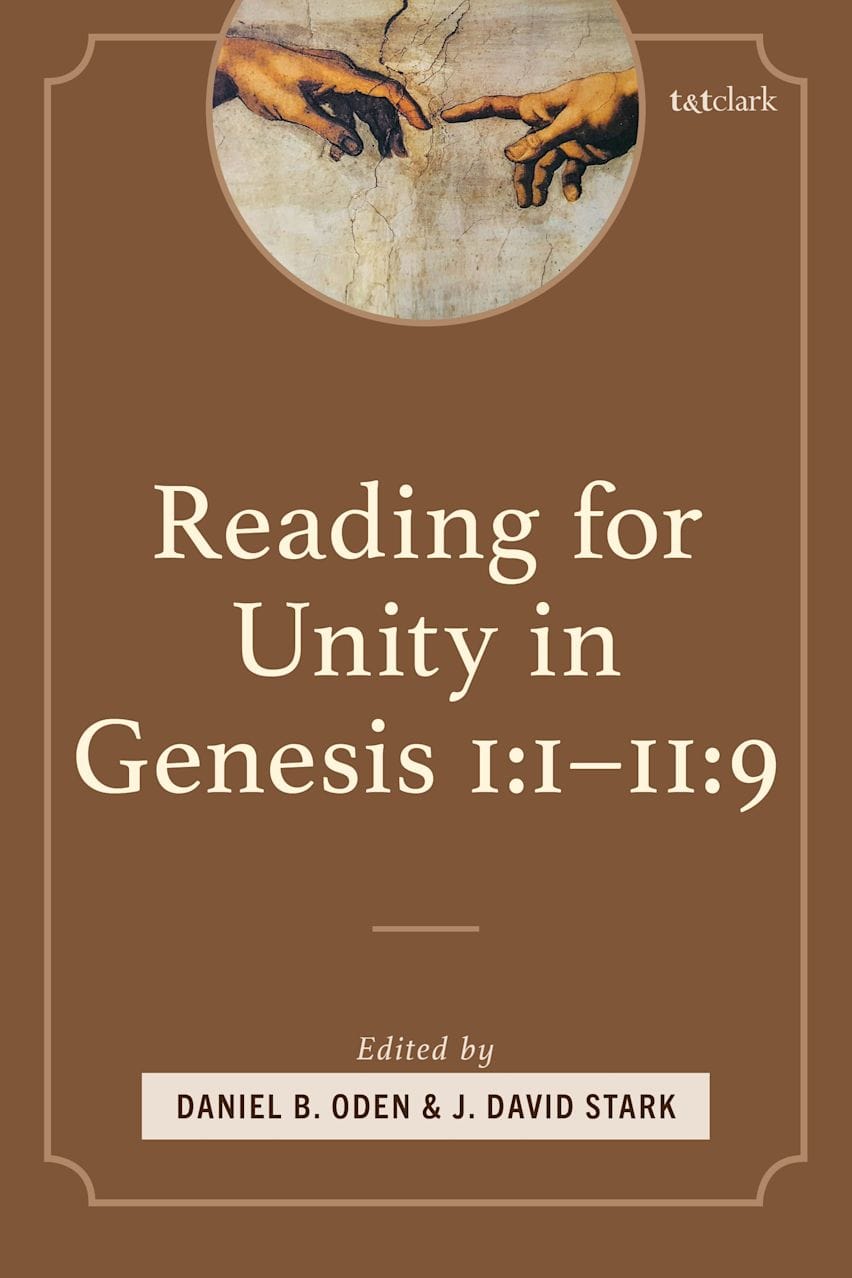
So, in cooperation with Daniel Oden (Harding University), a fine slate of contributors, and the production team at Bloomsbury T&T Clark, I’m delighted to see coming to press our new volume Reading for Unity in Genesis 1:1–11:9.2 The volume should be out on 11 December 2025 and is already available for preorder ( affiliate disclosure).
This volume’s essays discuss how Genesis figures in unity appeals from widely varying times from the Ancient Near East to the twenty-first century and in Judaism, Christianity, and Islam. In doing so, the contributors particularly attend to why and how these appeals connect themselves to the text and work to foster unity as they do.
In short, this volume discloses what it means to read for unity by examining this reading’s diverse manifestations. Along the way, the contributors explore how unity
- may or may not be a good and wholesome thing,
- is inevitably bound up with difference,
- both requires identifiable characteristics for a group and offers invitations to extend connection and resist exclusion,
- often isn’t so much a result of reading Genesis 1:1–11:9 as it is a presupposition for such readings, and
- relies on a commonality in the tradition that underpins various subordinate unities or disunities.
Conclusion
So, Genesis 1:1–11:9 and other texts will continue being the subject of agreements and disagreements among readers. Yet even the disagreements issue invitations to unity as readers render themselves adaptable to each other and, especially, to the text through the particular “rigor” of “hermeneutical experience”—namely, “uninterrupted listening.”3
-
Header image provided by Brett Jordan. ↩︎
-
Image provided by Bloomsbury. ↩︎
-
Hans-Georg Gadamer, Truth and Method, ed. and trans. Joel Weinsheimer and Donald G. Marshall, 2nd ed., Bloomsbury Revelations (affiliate disclosure; London: Bloomsbury Academic, 2013). ↩︎