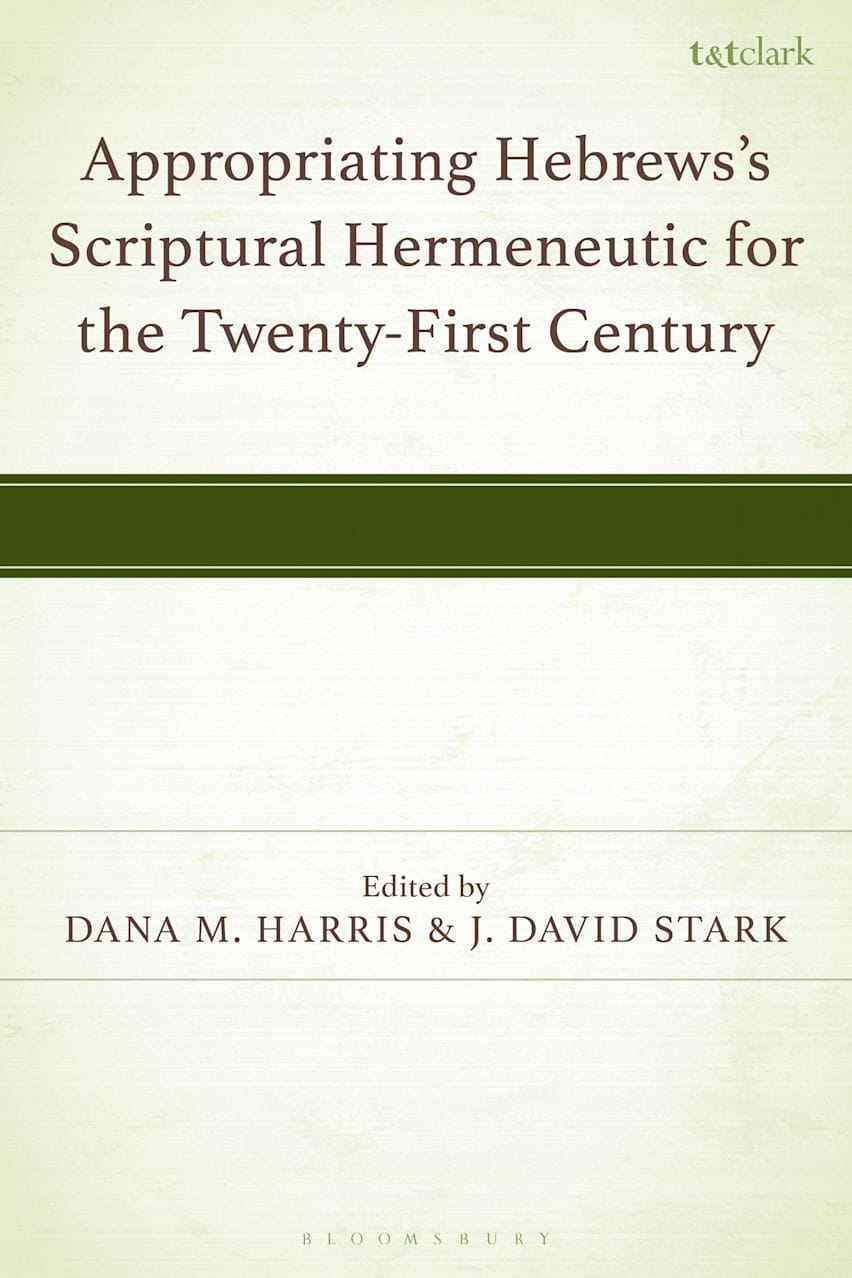
 Alex Stewart is Vice-President for Academic Services, Academic Dean, and Professor of New Testament at Gateway Seminary in Ontario, California. Among other books and articles, he is the author of Reading the Book of Revelation: Five Principles for Interpretation ( affiliate disclosure; Lexham, 2021) and the Revelation volume for the Exegetical Guide to the Greek New Testament ( affiliate disclosure; Broadman & Holman, 2024).1 In Hebrews’s Scriptural Hermeneutic ( affiliate disclosure), Alex’s essay discusses Hebrews’s use of narratives from Israel’s Scriptures in fear appeals.
How did you come up with the idea for what you wanted to argue in your essay?
I have long been interested in two things:
- better understanding the use of fear appeals in the New Testament and
- exploring the NT use of the OT.
This essay brings both of those long-standing research interests together by considering the hermeneutical assumptions evident in the use of the OT in the famous warning passages in Hebrews.
How did you structure the time you needed to research and write the essay? How did you coordinate work on this project around or alongside other commitments?
That is the perennial problem for every writer. Apart from a very small number of research professors, most writers are forced to squeeze time to write out of a schedule that is filled with the responsibilities that actually pay the bills.
In my case I normally research and write in the brief moments when I am caught up on all the urgent responsibilities. Sometimes, in a given day or hour, I prioritize research and writing over other work responsibilities, but one can only do that for so long because in the end everything needs to get done. I have no secret insight into how to do this, but research and writing takes a lot of focused time and energy. It doesn’t just magically happen, and unless someone is willing to sacrifice and work hard, it will never happen.
When working on your essay, what tools did you use?
I think I only used Microsoft Word with this essay. I have tried to use various bibliographic programs in the past, but often found them to take more time than they saved. I assume this is a user-error issue and not an insurmountable issue with the programs themselves.
 What closing advice would you offer to emerging biblical scholars as they work on papers for academic conferences and collaborative volumes like Hebrews’s Scriptural Hermeneutic?
It is important to have a clear sense of how the writing project fits into your vocational calling and responsibilities. If you are convinced that God has called you to the ministry of research and writing, you will have greater motivation, purpose, and joy in your work. These things are necessary to sustain long and challenging projects.
-
Header image provided by Tim Wildsmith. Author headshot provided by Gateway Seminary. Book cover image provided by Bloomsbury. ↩︎